
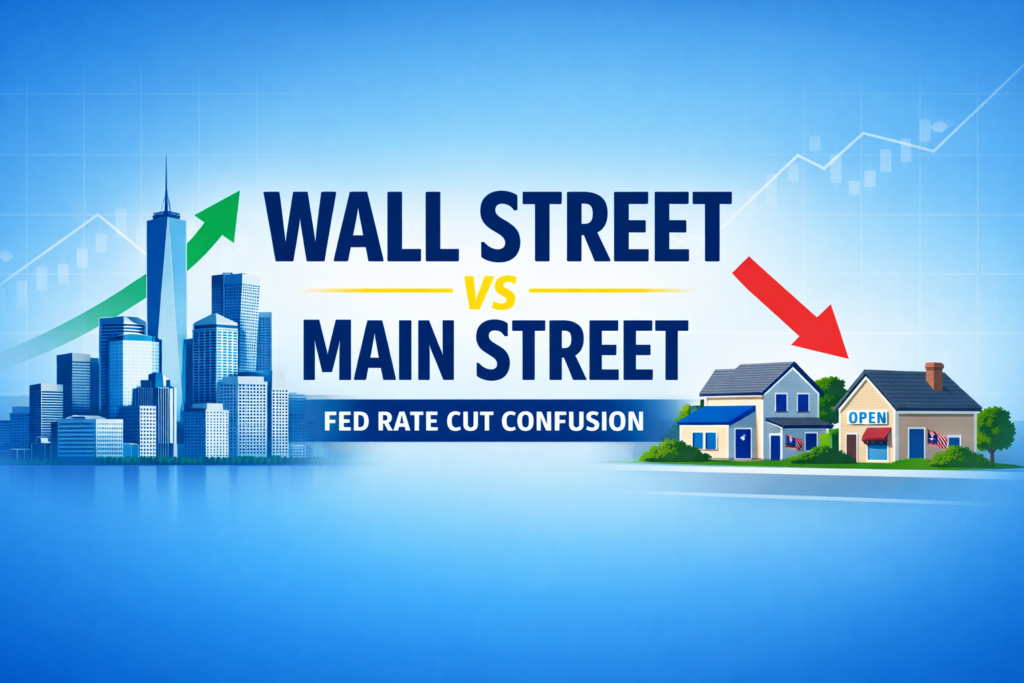
The current debate around a Federal Reserve rate cut is no longer just a policy discussion, because it is directly shaping business decisions, capital flows, and consumer behavior across the US economy. While Wall Street is pricing in future rate cuts and pushing equity markets higher, Main Street businesses and households continue to operate under high borrowing costs, which is quietly reshaping spending, hiring, and growth strategies.
From a market perspective, investors are acting early because lower interest rates improve corporate margins, reduce financing costs, and increase the present value of future earnings, which explains why stocks keep rising even before the Fed takes action. However, from an operational standpoint, small and mid-sized businesses still face expensive credit, cautious consumers, and slower demand, creating a disconnect between market optimism and real-world performance.
This gap matters because businesses do not grow on expectations alone, as they grow on cash flow, demand stability, and access to affordable capital, all of which remain under pressure while interest rates stay elevated. Although inflation has eased, cost structures for companies — including wages, rent, logistics, and insurance — remain high, forcing many firms to delay expansion plans, cut discretionary spending, or pass higher costs onto customers.
The Federal Reserve’s hesitation reflects this delicate balance, since cutting rates too early could reignite inflation and hurt long-term stability, while delaying cuts continues to strain consumers and suppress demand, which ultimately feeds back into weaker revenue growth for businesses. As a result, the Fed is choosing caution, even as markets respond aggressively to every signal, creating volatility that businesses must now plan around.
For business leaders, the key takeaway is clear: markets may move ahead of policy, but operating conditions lag behind, which means companies must manage risk carefully, protect liquidity, and stay flexible until rate cuts actually arrive. Those who assume immediate relief may overextend, while those who prepare for a longer period of tight conditions are better positioned to capture growth once policy finally shifts.
Read more – https://dollarfeverr.com/can-spacex-become-the-most-valuable-ipo-ever-1-5t-says-yes/
In practical terms, this moment favors disciplined businesses that focus on pricing power, cost control, and balance-sheet strength, because when rates eventually fall, capital will flow fastest toward companies that survived the pressure phase. Until then, Wall Street will continue trading on future promises, Main Street will operate under present constraints, and smart businesses will bridge the gap by planning for both realities at the same time.