
There is a famous saying in the professional world — hard skills help you get an interview, but soft skills help you get the job. A degree, a certificate, or even strong technical knowledge may open the door, but what truly decides growth inside the workplace is the ability to communicate, understand people, think clearly, and lead with empathy. These abilities are called soft skills, and today they matter more than ever before.
Imagine a situation where two candidates apply for the same high-profile role. Both studied in top institutions, gained equal experience, and mastered the same technical tools. On paper they look identical, so how will a company choose one over the other? The answer is simple — the decision depends on something that cannot be printed on a resume. It depends on soft skills, the invisible strengths that show how a person behaves, collaborates, speaks, reacts, and solves problems.
What Exactly Are Soft Skills?
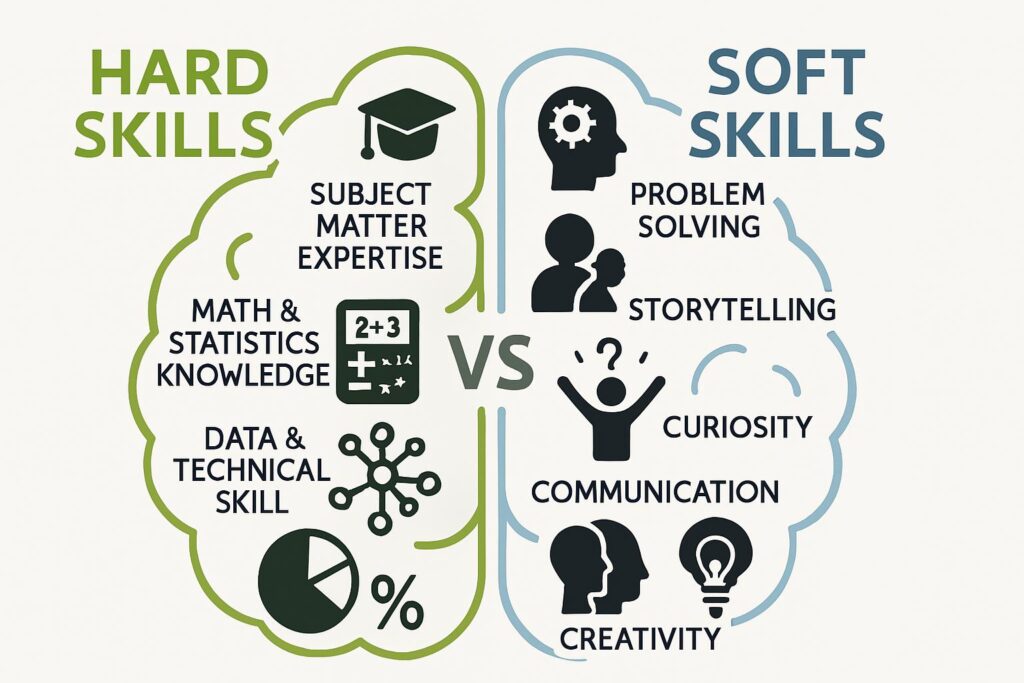
Soft skills are non-technical qualities that shape human interaction. They are less about knowledge and more about personality, behaviour, and emotional intelligence. Skills like effective communication, teamwork, empathy, critical thinking, active listening, adaptability, leadership and conflict resolution do not appear in exam papers, but they influence every moment inside a workplace. Hard skills help you do a task; soft skills help you do it with people. Together they create a balanced professional.
Think of an economist who understands numbers perfectly but cannot convey their meaning to others. Their knowledge becomes useless if people fail to interpret the data. Similarly, a manager may have an MBA and understand strategy, yet still struggle to guide a team if they lack empathy and listening ability. Knowledge without connection stays incomplete, and this is why soft skills transform competence into impact.
Why Soft Skills Are Becoming More Valuable
Studies show that 85% of job success comes from soft skills, not technical ones. Professionals with strong emotional intelligence earn higher wages, learn faster, and advance quicker because they adapt to change with ease. In today’s world, where AI, automation and rapid technology shifts are reshaping industries, technical skills rise and fall at surprising speed. But communication, attitude, leadership, negotiation and empathy never lose importance. They work like a backbone for every profession.
Soft skills also protect mental well-being. People with strong emotional understanding deal with stress more calmly, resolve conflict better, and maintain healthier relationships both inside and outside work. These skills help not only in careers, but also in friendships, decision-making, creativity and even personal happiness. Success feels lighter when one knows how to speak, respond and connect.
Soft Skills Grow From Childhood
This value is not new. Companies have always rewarded soft skills, whether openly or indirectly. Before hiring, many organizations conduct personality tests, ask behavioural questions, and evaluate body language during interviews. Promotions too depend on communication, leadership and team behaviour.
Schools are now recognizing this early. Across countries like India, Singapore, Finland and the UK, curriculums teach teamwork, classroom discussion, interaction-based learning and emotional development. Students are observed on participation, cooperation during projects, communication skills and group responsibility. These habits build confidence from the foundation and prepare future professionals for real challenges, not just exams
Can Soft Skills Be Learned? Yes.
Some people are naturally expressive or empathetic, but soft skills are not reserved only for them. Anyone can develop soft skills with practice. Experts suggest three simple methods.
First — empathy. Try to see a situation from another person’s perspective. Listen without interrupting. Respond, don’t react. Understanding emotion builds trust, and trust builds influence.
Second — effective communication. Words matter, but tone and body language also speak silently. The three V’s explain this well — visual (your expression), vocal (your tone), and verbal (your words). When these three align, messages become powerful and clear.
Third — learn from others. Watch how good leaders talk, how teammates solve issues, how confident speakers use pauses and expressions. Ask for feedback, accept suggestions, and improve gradually. Soft skills sharpen with interaction, not isolation.
Hard Skills + Soft Skills = Complete Professional
Hard skills get you inside the room, but soft skills help you stay there — and grow. The modern workplace demands people who solve problems, cooperate in teams, think creatively, speak confidently, and adapt during change. Machines can calculate, but only humans can motivate, understand and inspire.
Degrees may open opportunities, but behaviour shapes destiny. The strongest careers belong to those who balance knowledge with kindness, logic with empathy, and intelligence with good communication.
Growth today is not just about knowing more — it is about connecting better.
Being clever is useful, but being emotionally smart is powerful. A resume shows what you know; soft skills show who you are. Success follows those who combine both — the mind that understands work and the heart that understands people.
Soft skills don’t replace hard skills, they elevate them.
Learn them, refine them, use them — and you won’t just get the job, you will lead the room.